
The Legend of Korra
The Legend of Korra (2012) Overview The Legend of Korra is an animated series broadcast under the Nickelodeon banner, serving as a continuation of the legendary Avatar: The Last Airbender series. Premiering in 2012, the show is se…
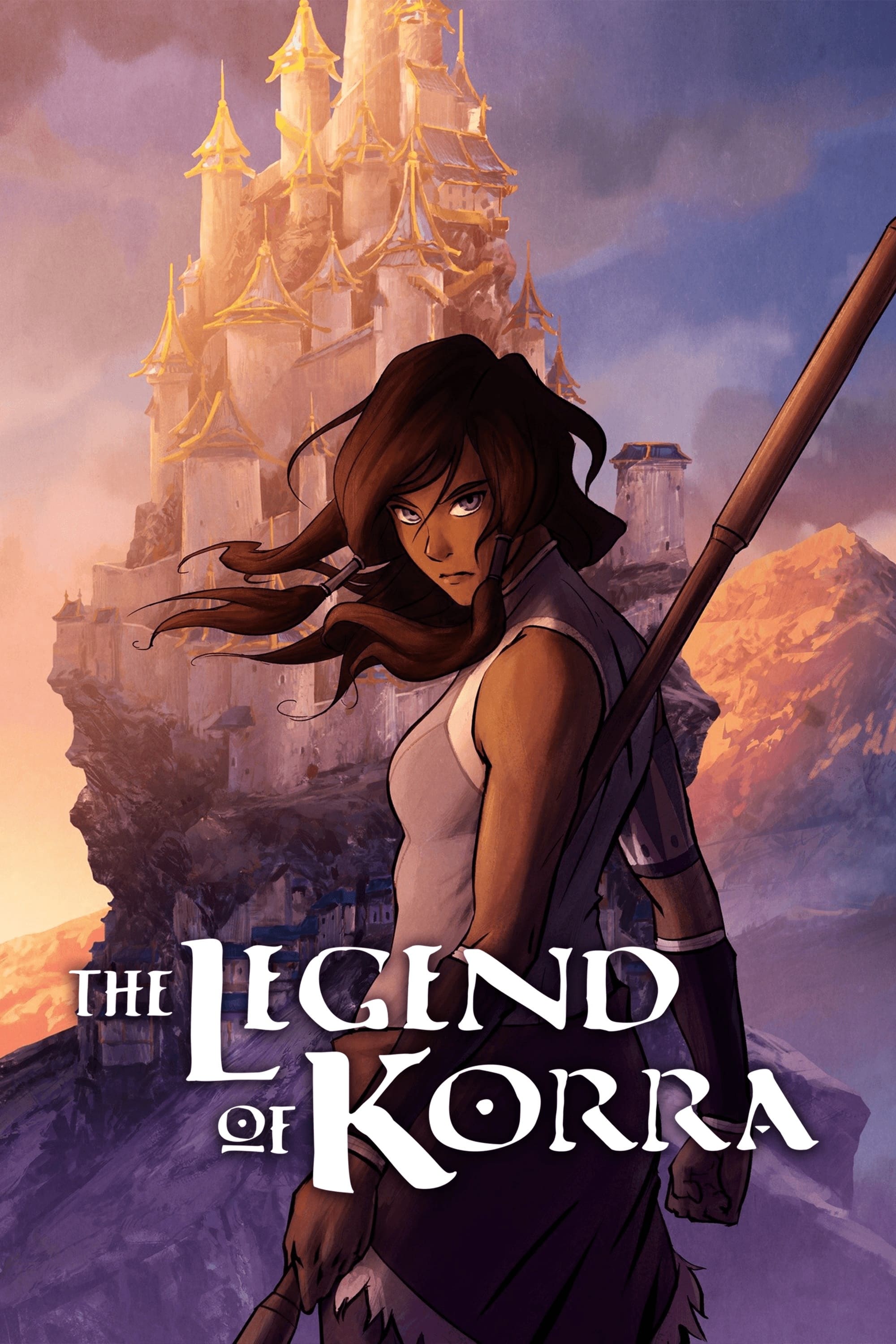
The Legend of Korra (2012)
Overview
The Legend of Korra is an animated series broadcast under the Nickelodeon banner, serving as a continuation of the legendary Avatar: The Last Airbender series. Premiering in 2012, the show is set roughly seventy years after Aang's story ends, presenting viewers with the adventures of the new Avatar, Korra. Written by Michael Dante DiMartino and Bryan Konietzko, the production not only sustains the success of its predecessor in terms of both visuals and storytelling but also builds a world that is darker, more complex, and open to more mature themes.
Across four seasons and a total of 52 episodes, the series explores Korra's personal growth, political conflicts, technological transformation, and the balance between the spirit world and the human world. Republic City, a modern metropolis where the cultures of the four nations blend together, serves as the show's main setting. This city is not merely a backdrop but a living organism in which the political and social dynamics of the story take shape.
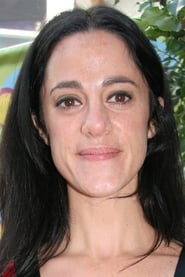
One of the notable names in the voice cast is Dante Basco. Known for his role as Prince Zuko in the original Avatar series, Basco briefly returns to his character in the Korra universe, strengthening the continuity and nostalgic connection of the franchise. This small but meaningful appearance is an important element that emotionally nourishes the bond between the two series.
Plot
The story revolves around Korra, the new Avatar born through the cycle of reincarnation following Avatar Aang's death. Coming from the Water Tribe, Korra is a more impulsive, powerful, and physically confrontational character compared to the previous Avatar. The fact that she has not yet mastered airbending makes her own shortcomings and growth process all the more visible.
When the series begins, Korra comes to Republic City to complete her training. However, the city turns out to be a far more complicated place than she imagined. A movement advocating for the rights of non-benders, political instability, tension between the spirit world and the human world, and various threats that emerge over time require Korra to develop not just physical strength but also leadership, empathy, and strategic thinking skills.
Each season contains its own independent main antagonist and thematic core; concepts such as equality, anarchy, spirituality, and revolution are explored in turn. This structure allows the series to avoid being confined to a simple "good triumphs over evil" formula, instead addressing a different philosophical and social issue in each season.
Why Watch It?
The Legend of Korra stands out as a production that pushes the boundaries of the animation format. The choreography in the fight scenes—particularly the sporting matches known as "pro-bending" and the large-scale conflict sequences—impresses viewers with its fluidity and visual design. The combination of steampunk-inspired technology with traditional elemental bending grants the universe a distinctive aesthetic identity.
One of the show's greatest strengths is its bold treatment of power, vulnerability, trauma, and healing through a female lead character. The physical and psychological challenges Korra faces throughout her journey are handled with a maturity that goes beyond the conventions of a children's show. Additionally, the depth of the supporting characters, the layered nature of the political intrigue, and the identity issues addressed in the later seasons of the series offer viewers a thought-provoking experience.
Who Is It For?
For viewers who loved the original Avatar: The Last Airbender series, this show is an almost unmissable continuation. However, the series is not a production that appeals to nostalgia alone; it is also a fitting choice for young adult viewers curious about action-packed animation, strong female characters, and social themes. Those who enjoy political intrigue, philosophical questioning, and character-driven stories will find satisfaction in the layered narrative the series offers.
Pros and Cons
Pros:
1. Visually rich, fluid, and creative fight scenes
2. A strong, complex, and realistically developing protagonist in Korra
3. In-depth exploration of different social and philosophical themes in each season
Cons:
1. Some pacing inconsistencies may be felt in certain episodes of the first season
2. Some supporting character storylines may feel rushed or left insufficiently resolved across seasons
Genre and Tone
The series combines action, fantasy, and drama genres. In tone, it is darker, more mature, and at times more melancholic compared to its predecessor. Elements of humor are still present, but the show's core backbone is built on heavier themes such as loss, trauma, political oppression, and the search for identity.
Length and Viewing Experience
Consisting of four seasons and a total of 52 episodes, the series has a structure that can be consumed quickly, with each episode running approximately 22-23 minutes. Although the seasons are interconnected, each one offers its own self-contained story arc, making for a satisfying viewing experience. It has an engaging rhythm well-suited to binge-watching.
Similar Productions
- Avatar: The Last Airbender
- Voltron: Legendary Defender
- Kipo and the Age of Wonderbeasts
- RWBY
- Star Wars: Rebels
Final Assessment
The Legend of Korra is a powerful production woven with bold themes, leaving its mark on the world of animation both visually and narratively. Enriched with details that preserve the series' universal connection—including Dante Basco's brief but meaningful contribution—this show offers a satisfying experience for both nostalgic fans and new viewers alike.
Details
Cast (116)




























































































Sezonlar
Gelince haber ver 2012
2012 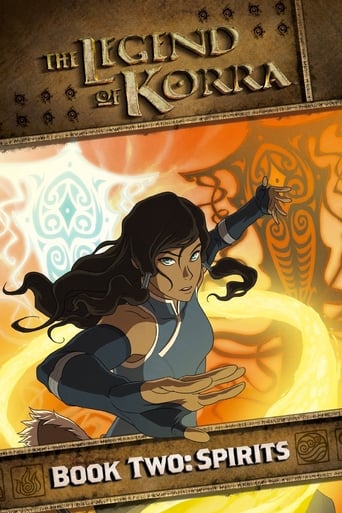 2013
2013 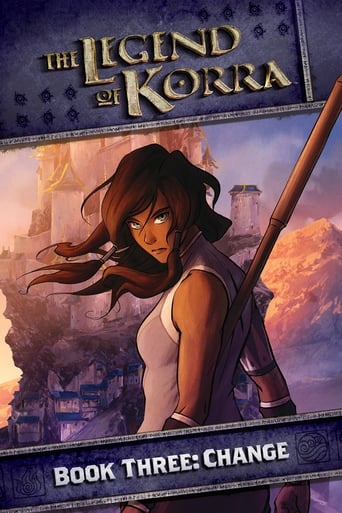 2014
2014 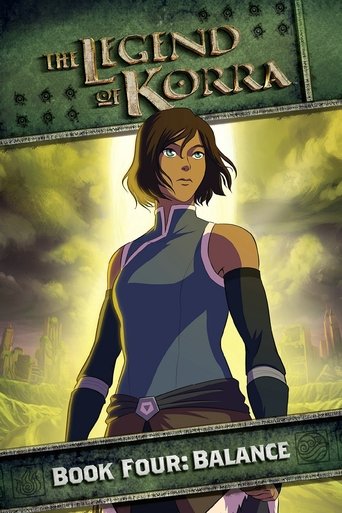 2014
2014 ByTv Değerlendirmesi
Gallery
Yorumlar
Henüz yorum yok. İlk yorumu siz yazın.
Recommended
Senin için seçelim
Türe göre süz, puana göre sırala ya da çarkı çevirip sürpriz öneri al.