
Sophie Scholl: The Final Days (2005)
"Sophie Scholl: The Final Days" is one of the most striking and unsettling historical dramas German cinema has produced about the Nazi era. Directed by Marc Rothemund, the film tells the story of the final days of Sophie Scholl, a…

Overview
"Sophie Scholl: The Final Days" is one of the most striking and unsettling historical dramas German cinema has produced about the Nazi era. Directed by Marc Rothemund, the film tells the story of the final days of Sophie Scholl, a member of the "White Rose" (Weiße Rose), a resistance group that opposed the Nazi regime during World War II. The character of Sophie, played by Julia Jentsch, forms the backbone of the film, and this performance earned the actress the Best Actress award at the Berlin Film Festival.
When the film was released in 2005, it received widespread acclaim from both critics and audiences, and was nominated for the Academy Award for Best Foreign Language Film. One of the production's most significant features is that it was written using Gestapo interrogation records that were made accessible in the 1990s. This gives the screenplay a documentary-like precision, grounded in real dialogue and real events, rather than a purely fictional dramatization.
Through this commitment to historical accuracy, the film does more than simply tell the viewer a story; it places them directly inside history, seated across from that interrogation table in that room.
Plot
The story takes place in Munich in February 1943. Sophie Scholl, along with her brother Hans Scholl and their friends, is a member of the White Rose, a clandestine resistance organization distributing illegal leaflets against the Nazi regime. The film begins with Sophie and Hans being caught distributing leaflets at the university, and focuses on the intense interrogation and trial process that follows.
At the center of the narrative are the long, tension-filled interrogation scenes between Sophie and Gestapo officer Robert Mohr. These scenes are the source of the film's dramatic power, as we watch a young woman, facing death, refuse to compromise her beliefs while cleverly defending herself with sharp answers. Avoiding the clichés of a heroic narrative, the film portrays Sophie not as a fearless symbol, but as a real person who has fears yet never loses her courage.
As the process unfolds, Sophie's bond with her family, her loyalty to her friends, and the moments she spends alone with her own conscience add further depth to the story. Without altering the historical outcome, the film bears witness to every moment of these final days alongside the viewer.
Why Watch It?
This film is not merely a history lesson but also a powerful character study that questions the limits of human will. Julia Jentsch's performance keeps the viewer riveted to the screen from start to finish; without ever becoming overly melodramatic or coldly detached, she masterfully conveys the contradictions and determination within Sophie's inner world.
The film's grounding in real transcripts gives the viewer a very strong sense that "this really happened." The dialogue in the interrogation scenes comes not from a fiction writer's imagination but from the real answers of a real person. This lends the film a rare authenticity.
The film also explores the tension between propaganda and resistance, individual conscience and social pressure, without ever adopting a didactic tone. The viewer is invited to ask themselves what they would do in Sophie's place. In this respect, while recounting a historical event, the film offers a universal and timeless moral inquiry.
Who Is It For?
For viewers interested in historical dramas, especially those set during World War II, this film is not to be missed. It is also a satisfying choice for those who enjoy performance-driven films featuring strong female characters.
For those expecting a fast-paced, action-packed war film, this production offers a somewhat different experience, as it largely takes place in enclosed spaces—interrogation rooms and the courtroom. It is an ideal choice for those who prefer a dialogue-heavy structure that builds tension through words and glances.
Viewers interested in moral philosophy, resistance movements, and themes of individual courage under totalitarian regimes will also find great satisfaction in this film.
Pros and Cons
Pros:
1. Julia Jentsch's unforgettable, award-winning performance stands out as the film's strongest element.
2. The screenplay, based on actual Gestapo transcripts, provides unparalleled credibility in terms of historical accuracy.
3. The density of dialogue and tension in the interrogation scenes keep the viewer glued to the screen until the very last minute.
Cons:
1. Its dialogue-heavy, mostly indoor structure may feel slow for viewers expecting action or visual variety.
2. For viewers unfamiliar with the historical context beforehand, some political and social references may not be immediately clear.
Genre and Tone
The film is positioned within the historical drama genre and presents a biographical narrative. Its tone is generally heavy, tense, and thought-provoking, containing no light or relaxing moments. Director Rothemund avoids emotional manipulation in favor of a plain, realistic style of storytelling. The camerawork is calm, uninterrupted, and focused on the characters' facial expressions, which supports the film's theatrical, almost documentary-like atmosphere.
The use of music is minimalist, so the tension in the scenes arises naturally from the dialogue and performances. This choice allows the film's emotional impact to reach the viewer in a genuine way, free of artificiality.
Runtime and Viewing Experience
The film runs approximately 120 minutes, and throughout this time the narrative largely consists of a succession of interrogation and courtroom scenes. The viewing experience requires intense concentration; the dialogue is fast-paced and dense with content, so it is recommended to watch in an environment free of distractions.
The film's pacing differs from that of a classic thriller; the tension arises not from the plot but from the characters' psychological struggle. For this reason, the viewer's patience and openness to the subtle emotional shifts between scenes will make the experience even more powerful. It is recommended to watch it in a single sitting, as the tension of the narrative creates its greatest impact through an uninterrupted flow.Similar Works
- Die Welle (2008) – A striking drama exploring the impact of authoritarian regimes on individuals in Germany.
- Das Leben der Anderen / The Lives of Others (2006) – An award-winning German film addressing the conflict between totalitarian surveillance and individual conscience.
- Schindler's List (1993) – A classic masterpiece dealing with individual courage and moral choices during World War II.
- Hannah Arendt (2012) – A biographical drama examining individual responsibility and freedom of thought in the aftermath of the Nazi genocide.
- Elser: Er hätte die Welt verändert (2015) – A historical film about a resistance figure who attempted to assassinate Hitler.
- Vor der Morgenröte (2016) – An emotional biography depicting the life struggle of a writer fleeing Nazi Germany.
Final Assessment
"Sophie Scholl: The Final Days" is a rare example of a historical drama that remains strictly faithful to historical accuracy while losing none of its emotional depth. Julia Jentsch's performance elevates the film beyond an ordinary biography into an unforgettable cinematic experience. Although its heavy, thought-provoking tone may not appeal to everyone, for viewers seeking a profound reflection on historical truth, human dignity, and conscience, this film is an absolute must-watch masterpiece. Sophie Scholl's story is not merely a memory of the past, but a lesson in courage that remains relevant in every era.
Details
Cast (25)

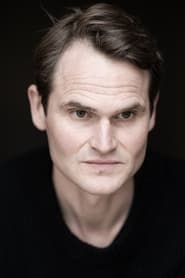

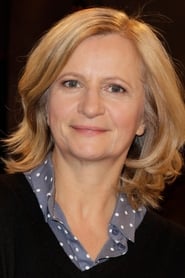

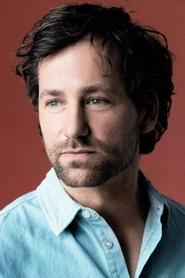

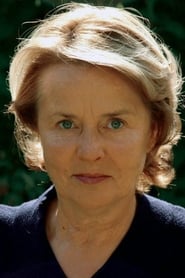




Ödüller
- European Film Award - People's Choice Award for Best Director 2005
- European Film Award for Best Actress 2005
- Jameson People's Choice Award for Best Actress 2005
7 adaylık
- International Submission to the Academy Awards 2006
- Yabancı Dilde En İyi Film Akademi Ödülü 2006
- European Film Award - People's Choice Award for Best Director 2005
- European Film Award for Best Actress 2005
- European Film Award for Best Film 2005
- European Film Award for Best Production Designer 2005
- Jameson People's Choice Award for Best Actress 2005
ByTv Değerlendirmesi
Gallery
Yorumlar
Henüz yorum yok. İlk yorumu siz yazın.
Recommended




Senin için seçelim
Türe göre süz, puana göre sırala ya da çarkı çevirip sürpriz öneri al.