La Dolce Vita (1960)

25.05.2026 12:10 • 5 min read • 172 • #Movies
Platform: Sinema Warning: +16 Pace: Düşük Editor: 9/10 İtalyan Sineması Tarih Drama Sosyete Roma
1960 174 min 8.0 · 2,0K votes KomediDram

"La Dolce Vita" is a film directed by Federico Fellini in 1960, considered one of the most important works of Italian cinema. Addressing Rome's dazzling lifestyle and the emptiness it brings, the film offers viewers a profound soc…
8.0
2,0K votes
Listeme ekle
La Dolce Vita (1960)

Overview

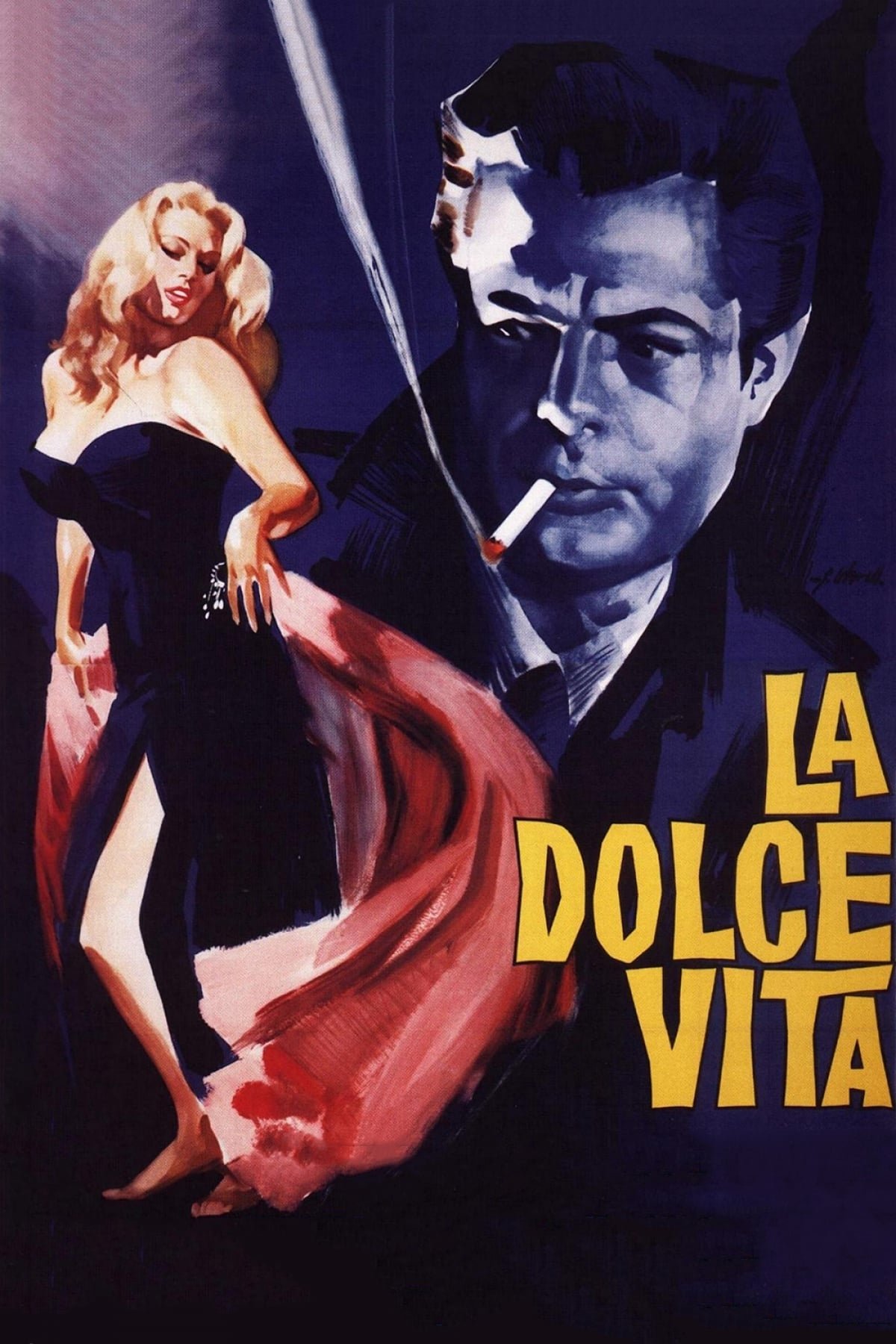
"La Dolce Vita" is a film directed by Federico Fellini in 1960, considered one of the most important works of Italian cinema. Addressing Rome's dazzling lifestyle and the emptiness it brings, the film offers viewers a profound social and personal inquiry. Fellini's distinctive style and cinematography make this film both an artistic and cultural masterpiece. "La Dolce Vita" follows a journey questioning the superficial and transient aspects of life, starring Marcello Mastroianni in the lead role.

Plot

The film focuses on the life of journalist Marcello Rubini (Marcello Mastroianni) in Rome. Lost in a world full of the city's high society, artists, and celebrities, Marcello searches for true happiness and meaning. While following Marcello's nightlife adventures and the various characters he encounters, the film also unveils Rome's striking landscapes. The main theme of the film revolves around Marcello's attempt to explore life on one hand, while confronting the dissatisfaction and emptiness it brings on the other.

Throughout the film, Fellini masterfully weaves his observations and the characters' inner conflicts, offering viewers a profound perspective. Rome's magnificent yet superficial life is questioned through Marcello's story. Filled with numerous different characters and stories, the film constantly makes the audience think and drags them through different emotional experiences.

Why Should You Watch It?

"La Dolce Vita" is not just a film, but also a work of art. Fellini's mastery, combined with the harmony of images and sounds, profoundly affects the viewer. The film stands out with its visual aesthetics, in-depth character analyses, and impressive dialogues. It also stands at a point where social critique and personal introspection meet, offering different layers of meaning to every viewer.

The film's cultural impact and its place in cinema history over time make it a must-watch production. "La Dolce Vita" has a narrative that pushes the boundaries of cinematic art. Its themes, which remain relevant over the years, encourage viewers to think and question. It offers an experience not to be missed for both cinema enthusiasts and anyone interested in art.

Who Is It Suitable For?

"La Dolce Vita" is an extremely suitable film for those who love art cinema, seek in-depth character studies, and value social critique. Containing elements of drama, comedy, and art, the film is an important resource especially for film students and critics. At the same time, it offers an enjoyable experience for cinema viewers who prefer productions with high visual aesthetics.

However, since the film has a slow-moving narrative, it may seem boring for viewers who enjoy action and fast-paced events. Additionally, for audiences other than those seeking deep themes and character analysis, the film can occasionally be challenging.

Pros and Cons

Pros:

1. Its visual aesthetics and cinematography are quite impressive.

2. It offers in-depth character studies and social critiques.

3. A production that has left its mark on cinema history with its iconic scenes and dialogues.

Cons:

1. It has a slow-moving narrative, which may bore some viewers.

2. It requires attention and patience to understand its themes and characters.

Genre and Tone

"La Dolce Vita" is a production that blends elements of drama and comedy. While Fellini's distinctive style shapes the film's tone, it creates an atmosphere that is both thought-provoking and emotionally impactful for the viewer. Although the film occasionally takes on a melancholic mood, it also reflects the energy and vibrancy of Rome. This balance further strengthens the impact the film leaves on the viewer.

Runtime and Viewing Experience

The film runs for approximately 2 hours and 50 minutes. This lengthy duration becomes quite meaningful due to the in-depth character studies and complex themes throughout the film. Offering a structure that requires the viewer's attention and patience, "La Dolce Vita" delivers a fully immersive viewing experience. As viewers get lost in the Roman atmosphere created by Fellini, they embark on both a visual and emotional journey.

Similar Productions

1. 8½ (1963) - Another masterpiece by Federico Fellini, this film addresses a director's creative crisis and his questioning of his life.

2. The Great Beauty (2013) - Directed by Paolo Sorrentino, this film explores modern life in Rome and its depths.

3. Amarcord (1973) - Another important work by Fellini, dealing with memories of youth and rural life in Italy.

4. The Leopard (1963) - This classic film by Luchino Visconti addresses aristocratic life in Italy and processes of change.

5. The Tree of Life (2011) - Directed by Terrence Malick, this film offers a profound inquiry into the meaning of life.

Final Assessment

"La Dolce Vita" is not just a film, but one of the most important works in the history of cinema. Fellini's mastery, combined with in-depth character analysis and social critiques, offers viewers an unforgettable experience. The questions it raises about Rome's dazzling life continue to make viewers think and emotionally affect them. This film will continue to remain a thought-provoking production that both cinema enthusiasts and anyone interested in art will enjoy watching.

Details

DirectorFederico Fellini
WriterBrunello Rondi, Pier Paolo Pasolini, Ennio Flaiano, Tullio Pinelli
StatusReleased
CountryFrance, Italy
LanguageGerman, English, French, Italian
Revenue$19,647,000
dying and deathseanewspaperlovesicknesssunriseunsociabilityrome, italyphotographerloss of loved onesadnessnight lifefountainblack and whitecowardliness

Cast (173)

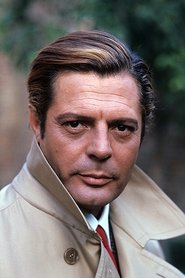
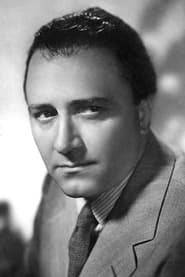
Marcello Mastroianni
Marcello Rubini
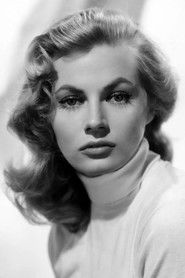
Anita Ekberg
Anita Ekberg
Sylvia
Anouk Aimée
Anouk Aimée
Maddalena
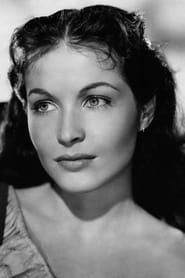
Yvonne Furneaux
Yvonne Furneaux
Emma
Magali Noël
Magali Noël
Fanny
Alain Cuny
Alain Cuny
Steiner
Annibale Ninchi
Annibale Ninchi
Marcello's father
Walter Santesso
Walter Santesso
Paparazzo
Valeria Ciangottini
Valeria Ciangottini
Paola
Riccardo Garrone
Riccardo Garrone
Riccardo
Ida Galli
Ida Galli
Debutante of the year
Audrey McDonald
Audrey McDonald
Jane
Polidor
Polidor
Pagliaccio
Alain Dijon
Frankie Stout
Mino Doro
Mino Doro
Lover of Nadia
Giulio Girola
Giulio Girola
Police commissioner
Laura Betti
Laura Betti
Laura
Nico
Nico
Nico
Carlo Musto
Transvestite
Enzo Cerusico
Enzo Cerusico
Photographer
Giulio Paradisi
Giulio Paradisi
Photographer
Enzo Doria
Enzo Doria
Photographer
Enrico Glori
Enrico Glori
Admirer of Nadia
Adriana Moneta
Adriana Moneta
Ninni
Massimo Busetti
Miracle child
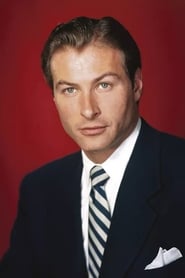
Lex Barker
Lex Barker
Robert - Sylvia's husband
Jacques Sernas
Jacques Sernas
The star
Nadia Gray
Nadia Gray
Nadia
Giuseppe Addobbati
Giuseppe Addobbati
(uncredited)
Conte Brunoro Serego Aligheri
Young Man with Mink Coat (uncredited)
Gabriella Andreini
Gabriella Andreini
Woman at Nadia's Party (uncredited)
Federika André
Tenant in Steiner's House (uncredited)
Armando Annuale
Armando Annuale
(uncredited)
Joan Antequera
Woman at Castle (uncredited)
Juan Antequero
Spanish Gentleman with Eyepatch at Castle (uncredited)
Gianni Baghino
(uncredited)
Nadia Balabine
Nadia Balabine
Reporter (uncredited)
Ignazio Balsamo
Ignazio Balsamo
(uncredited)
Remo Benedetti
(uncredited)
Andrea Bianchi
Andrea Bianchi
Man at Nadia's Party (uncredited)
Lars Bloch
Lars Bloch
Party Guest (uncredited)
Leonardo Botta
Leonardo Botta
Doctor (uncredited)
Ida Bracci Dorati
(uncredited)
Ferdinando Brofferio
Maddalena's Lover (uncredited)
Giovanna Busetti
Lying Child of The Miracle (uncredited)
Tito Buzzo
Muscle Man (uncredited)
Daniela Calvino
Daniela Calvino
Daniela (uncredited)
Tony Campanino
Man at Nightclub (uncredited)
Fabrizio Capucci
Fabrizio Capucci
Photographer at Press Conference (uncredited)
Donato Castellaneta
Donato Castellaneta
Reporter (uncredited)
Adriano Celentano
Adriano Celentano
Self (uncredited)
Elisabetta Cini
Sleeping Duchess (uncredited)
Giulio Citti
Man at Nightclub (uncredited)
Leo Coleman
Leo Coleman
Negro Dancer (uncredited)
Nani Colombo
Woman at the Mirror (uncredited)
Mario Conocchia
Mario Conocchia
Lawyer with Nadia's Bra (uncredited)
Francesco Consalvo
Scalise's Assistant (uncredited)
Tiziano Cortini
Movie News Cameraman (uncredited)
Decimo Cristiani
Young Man That Doesn't Talk (uncredited)
Mario De Grenet
Man at Castle That Dislikes Dog's Smell (uncredited)
Andrea De Pino
(uncredited)
Adele De Rossi
(uncredited)
Donatella Della Nora
Reporter (uncredited)
Christine Denise
Woman Eating a Chicken (uncredited)
Katherine Denise
(uncredited)
Carlo Di Maggio
Toto Scalise (uncredited)
François Dieudonné
Reporter (uncredited)
Venceslao Dobrzensky
Giovanni (uncredited)
Donatella Esparmer
Lady with the Irritated Man (uncredited)
Paolo Fadda
Assistant Police Inspector (uncredited)
Umberto Felici
Reporter (uncredited)
Oretta Fiume
Oretta Fiume
Lisa (uncredited)
Rina Franchetti
Rina Franchetti
Mother of the Miracle Children (uncredited)
Giacomo Gabrielli
Maddalena's Father (uncredited)
Franco Giacobini
Franco Giacobini
Journalist at the Telephone (uncredited)
Angela Giavalisco
Woman at Airport (uncredited)
Romolo Giordani
Man at Castle (uncredited)
Christine Graefeck
(uncredited)
Lily Granado
Lucy (uncredited)
Libero Grandi
(uncredited)
Maurizio Guelfi
Reporter (uncredited)
Gloria Hendy
Woman in Via Veneto (uncredited)
April Hennessy
Woman in Via Veneto (uncredited)
Nina Hohenlohe
Woman at Castle (uncredited)
Dominot
Transvestite (uncredited)
Gloria Jones
Gloria (uncredited)
Carlo Kechler
Man with Clock (uncredited)
Else Knorr
(uncredited)
Paolo Labia
Servant in Maddalena's Household (uncredited)
John Francis Lane
Reporter (uncredited)
Sondra Lee
Sondra Lee
Ballerina in Spoleto (uncredited)
Marianne Leibl
Yvonne's Companion in Miracle Sequence (uncredited)
Guglielmo Leoncini
Scalise's Secretary (uncredited)
Giuliana Lojodice
Giuliana Lojodice
Servant at Steiner's House (uncredited)
Renée Longarini
Miss Steiner (uncredited)
Francisco Lori
Man in Miracle Sequence (uncredited)
Francesco Luzi
Radioreporter (uncredited)
Mario Mallarno
Reporter (uncredited)
Renato Mambor
A Tall Young Man (uncredited)
Vittorio Manfrino
Tabarin Director (uncredited)
Maria Marigliano
Massamilla (uncredited)
Carlo Mariotti
Male Nurse (uncredited)
Gino Marturano
Gino Marturano
Pimp (uncredited)
Maria Mazzanti
Woman at Airport (uncredited)
Harriet Medin
Harriet Medin
Sylvia's Secretary (uncredited)
Marta Melocco
(uncredited)
Nello Meniconi
Man on Via Veneto (uncredited)
Alex Messoyedoff
Priest at the Miracle Site (uncredited)
Gianfranco Mingozzi
Gianfranco Mingozzi
Priest That Lets Steiner Play Organ (uncredited)
Lucia Modigliani
(uncredited)
Maite Morand
Reporter (uncredited)
Aurelio Nardi
Uncle of Lying Children of The Miracle (uncredited)
Desmond O'Grady
Steiner's Guest (uncredited)
Liana Orfei
Liana Orfei
(uncredited)
Umberto Orsini
Umberto Orsini
Man in Sunglasses That Helps Nadia Strip (uncredited)
Contessa Cristina Paolozzi
Laughing Girl at Seance (uncredited)
Ada Passeri
Ada Passeri
Woman in Miracle Sequence (uncredited)
Franca Pasut
Franca Pasut
Girl Covered with Feathers (uncredited)
Loretta Pepi
(uncredited)
Paola Petrini
Paola Petrini
(uncredited)
Cesarino Miceli Picardi
Irate Man in Nightclub (uncredited)
Princess Doris Pignatelli
Lady in White Coat at Castle (uncredited)
Alberto Plebani
Alberto Plebani
Doctor (uncredited)
Oliviero Prunas
Oliviero - Son of Prince (uncredited)
Giovanni Querrel
Man at Nightclub (uncredited)
Giulio Questi
Giulio Questi
Don Giulio (uncredited)
Concetta Ragusa
Reporter (uncredited)
Loretta Ramaciotti
Woman in Seance (uncredited)
Leonida Repaci
Leonida Repaci
Steiner's Guest (uncredited)
Alfredo Rizzo
Alfredo Rizzo
Television Director (uncredited)
Rosemary Rennel Rodd
English Medium (uncredited)
Giancarlo Romani
Policeman (uncredited)
Franco Rossellini
Franco Rossellini
The Beautiful Horseman (uncredited)
Prince Eugenio Ruspoli di Poggio Suasa
Don Eugenio Mascalchi (uncredited)
Margherita Russo
Steiner's Guest (uncredited)
Anna Maria Salerno
Prostitute's Friend (uncredited)
Anna Salvatore
Steiner's Guest (uncredited)
Archie Savage
Archie Savage
Negro Dancer (uncredited)
Lisa Schneider
Woman in Miracle Sequence (uncredited)
Maria Pia Serafini
Second Lady with the Irritated Man (uncredited)
Noel Sheldon
Man in Via Veneto (uncredited)
Isabella Soldani
(uncredited)
Letizia Spadini
Steiner's Guest (uncredited)
Giò Stajano
Giò Stajano
Pierone (uncredited)
Gino Talamo
(uncredited)
Sandra Tesi
Young Girl Living Nearby (uncredited)
Henry Thody
Reporter (uncredited)
Tomás Torres
Gianelli (uncredited)
Iris Tree
Poetess at Steiner's Party (uncredited)
Vando Tress
Police Inspector (uncredited)
Gondrano Trucchi
Gondrano Trucchi
Servant at Caracalla's (uncredited)
Teresa Tsao
Woman in Nightclub (uncredited)
Winie Vagliani
The Lady Who sings at Steiner's (uncredited)
Leontine Van Strein
Matinee Idol's Girl Friend (uncredited)
Aldo Vasco
Aldo Vasco
Man in Miracle Sequence (uncredited)
Lucia Vasilicò
Young Woman Making Confession at Nadia's Party (uncredited)
Maria Teresa Vianello
Woman at Airport (uncredited)
Sandy von Normand
Interpreter at the Press Conference (uncredited)
Antoinette Weynen
(uncredited)
Angela Wilson
Woman in Via Veneto (uncredited)
Vadim Wolkonsky
Prince Mascalchi (uncredited)
Maria Teresa Wolodimeroff
The Bored Lady (uncredited)
Gianni Zamputo
Man at Nadia's Party (uncredited)
Italo Zingarelli
Italo Zingarelli
Don Giulio (uncredited)
Iolanda Fortini
Iolanda Fortini
(uncredited)
Marta Timar
Marta Timar
(uncredited)
Bruna Cealti
Bruna Cealti
(uncredited)
Nancy Lecchini
Nancy Lecchini
Party Guest (uncredited)
Giulio Tomei
Giulio Tomei
Night Club Customer (uncredited)
Lucia Cavalieri
Lucia Cavalieri
Old Woman by the Miracle Tree (uncredited)
Edward Febo Kelleng
Edward Febo Kelleng
Party Guest (uncredited)
Rio Nobile
Rio Nobile
Nightclub Customer (uncredited)
Romalı Perihan
Romalı Perihan

Ödüller

2 ödül · 4 adaylık
  • Academy Award for Best Costume Design, Black-and-White 1962
  • Altın Palmiye 1960
4 adaylık
  • Academy Award for Best Costume Design, Black-and-White 1962
  • En İyi Özgün Senaryo Akademi Ödülü 1962
  • En İyi Yönetmen Akademi Ödülü 1962
  • Academy Award for Best Art Direction, Black and White

ByTv Değerlendirmesi

Bu bölüm izleyici oylarından bağımsızdır; ByTv'nin kendi keşif değerlendirmesidir.
Editör puanı
9/10
Tempo
Düşük
Yaş sınırı
NR
ABD sınıflandırması
Nerede izlenir
Sinema
Durum
Vizyona girdi
Yapım
İtalya
Künye bilgileri TMDB'den alınır; değerlendirme ve metinler ByTv tarafından hazırlanır. Nasıl çalıştığımızı Editöryel Politika sayfamızda anlatıyoruz.

Gallery

Sen kaç puan verirsin?
Henüz oy verilmemiş — ilk sen ol.

Yorumlar

Yorum yapmak için giriş yapın — hesabınız yoksa bir dakikada oluşturabilirsiniz. Giriş yap Üye ol

Henüz yorum yok. İlk yorumu siz yazın.

Recommended
Ne izleyeceğine karar veremedin mi?

Senin için seçelim

Türe göre süz, puana göre sırala ya da çarkı çevirip sürpriz öneri al.