
The Pianist
The Pianist (2002) Overview Directed by Roman Polanski, "The Pianist" is one of the most powerful war dramas in cinema history, portraying the Jewish genocide that took place in Warsaw during World War II through the eyes of an ar…
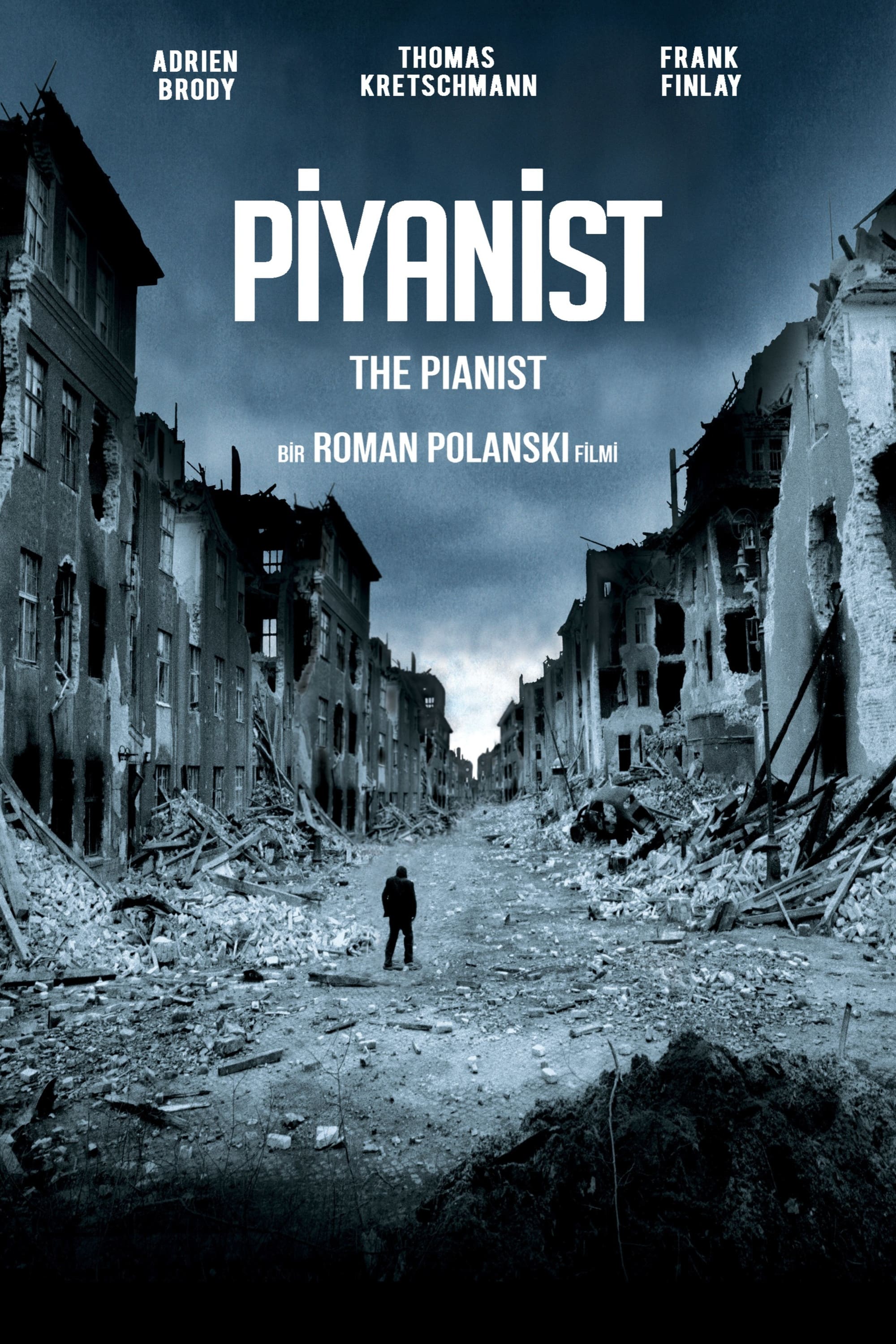
The Pianist (2002)
Overview
Directed by Roman Polanski, "The Pianist" is one of the most powerful war dramas in cinema history, portraying the Jewish genocide that took place in Warsaw during World War II through the eyes of an artist who bore witness to it. The film is based on a true story and depicts the survival struggle of Polish pianist Władysław Szpilman in Nazi-occupied Warsaw. Starring Adrien Brody in the lead role, the production won the Palme d'Or at the 2003 Cannes Film Festival and went on to receive three Academy Awards (Best Director, Best Actor, Best Adapted Screenplay).
Featuring Maureen Lipman in the cast as well, the film was shot from a perspective informed by Polanski's own childhood experiences, lending it a unique intimacy and authenticity. Since the director himself is a Holocaust survivor, the events depicted serve not merely as a historical record but as a personal testimony as well. Through its visual storytelling, acting performances, and use of music, The Pianist offers viewers an unforgettable cinematic experience.
Plot
The film tells the story of Władysław Szpilman, a talented pianist living in Warsaw in 1939. The events, which begin as German bombs strike the city while he is playing on the radio, reveal how the lives of Szpilman and his family were fundamentally transformed by the Nazi occupation. As the Jewish population is subjected to restrictions, discrimination, and escalating persecution, Szpilman's relocation to the ghetto, the fragmentation of his family, and his own struggle to survive form the backbone of the film.
As the story progresses, viewers witness Szpilman's efforts to survive while hiding in the city, aided by various people and driven by incredible determination. The film portrays the devastating effects of war through an individual experience, in a manner that is far from exaggerated yet profoundly moving. The theme of how art—especially music—can give humans strength and meaning even in the darkest of times is felt throughout the depths of the film.
Why Watch It?
The Pianist offers a powerful testimony to one of the darkest periods in human history, going far beyond being simply a war film. Adrien Brody's performance reflects the character's physical and psychological transformation with incredible authenticity; this role is considered the pinnacle of the actor's career. Polanski's directorial approach stands out for handling dramatic scenes in a restrained, understated, and impactful manner, avoiding melodrama.
The film's visual language conveys the destruction of Warsaw and the trauma experienced by its people with an almost documentary-like sensitivity. The music, particularly Chopin's works, is one of the most important elements strengthening the film's emotional atmosphere. Staying faithful to historical reality, the story offers viewers an experience that is both educational and deeply shattering. Regarded as one of the most successful productions in cinema history dealing with war and genocide themes, this film has earned its place among the classics that must be seen.
Who Is It Suitable For?
The Pianist is an excellent choice for viewers interested in historical dramas, the World War II era, and true-life stories. Audiences who are prepared for heavy, emotional content and who view cinema not merely as entertainment but also as a means of bearing witness will be deeply affected by this film. It is also a great source of enjoyment for viewers who value acting performances, directorial technique, and cinematography.
However, due to the violent scenes and heavy atmosphere it contains, the film may be challenging for sensitive viewers. Parental guidance is recommended for younger viewers, as the film conveys historical reality without softening it. For those studying cinema or history enthusiasts, this is a production not to be missed.
Pros and Cons
Pros:
1. Adrien Brody's unforgettable, Oscar-winning performance
2. Roman Polanski's authentic and compelling direction, drawn from his personal experiences
3. A shattering, thought-provoking narrative faithful to historical reality
Cons:
1. The heavy and at times challenging content may be distressing for sensitive viewers
2. Its long runtime and some slow-paced sections may test some viewers' attention
Genre and Tone
The film offers one of the strongest examples of the historical drama and war cinema genres. Its tone is extremely serious, heavy, and thought-provoking; a balance is struck throughout the story as it moves between hope and despair. Polanski's storytelling avoids emotional manipulation and prioritizes realism, which further strengthens the film's impact. The music, especially the classical piano pieces, is a key element shaping the film's emotional tone.
Runtime and Viewing Experience
Running approximately 150 minutes, the film has a long but fluid narrative. The viewing experience requires intense emotional engagement, so a focused, uninterrupted viewing environment is recommended. Given the film's heavy atmosphere, watching it in a single sitting is advisable, as the story's cohesion and emotional intensity are felt more effectively without interruption.
Similar Productions
- Life is Beautiful (1997)
- Son of Saul (2015)
- The Boy in the Striped Pyjamas (2008)
- Come and See (1985)
- Denial (2016)
Final Verdict
The Pianist stands out as one of the most powerful and moving war dramas in cinema history. Roman Polanski's storytelling, drawn from his personal experiences, combines with Adrien Brody's extraordinary performance to create an unforgettable cinematic experience. Staying faithful to historical reality, the story blends one of the darkest periods of humanity with the power of art and the will to survive. Despite its heavy content, this film offers viewers a profound experience of reflection and empathy, and has gone down in history as a masterpiece that every film lover must watch.
Details
Cast (79)







































































Ödüller
- En İyi Erkek Oyuncu Akademi Ödülü 2003
- En İyi Uyarlama Senaryo Akademi Ödülü 2003
- En İyi Yönetmen Akademi Ödülü 2003
- Altın Palmiye 2002
- European Film Award for Best Cinematographer 2002
- BAFTA En İyi Film Ödülü
- BAFTA En İyi Yönetmen Ödülü
- National Board of Review: Top Ten Films
11 adaylık
- En İyi Erkek Oyuncu Akademi Ödülü 2003
- En İyi Film Akademi Ödülü 2003
- En İyi Film Kurgusu Akademi Ödülü 2003
- En İyi Kostüm Tasarımı Akademi Ödülü 2003
- En İyi Sinematografi Akademi Ödülü 2003
- En İyi Uyarlama Senaryo Akademi Ödülü 2003
- En İyi Yönetmen Akademi Ödülü 2003
- European Film Award for Best Cinematographer 2002
- European Film Award for Best Director 2002
- European Film Award for Best Film 2002
- Jameson People's Choice Award for Best Actor 2002
ByTv Değerlendirmesi
Gallery
Yorumlar
Henüz yorum yok. İlk yorumu siz yazın.
Recommended










Yazıda geçen yapımlar

Senin için seçelim
Türe göre süz, puana göre sırala ya da çarkı çevirip sürpriz öneri al.