
Salvador (Puig Antich) (2006)
"Salvador (Puig Antich)" is a 2006 biographical drama that sheds light on a dark period in Spain's history. Directed by Manuel Huerga, the film is inspired by a true event from the final years of the Francisco Franco regime — the…
Overview
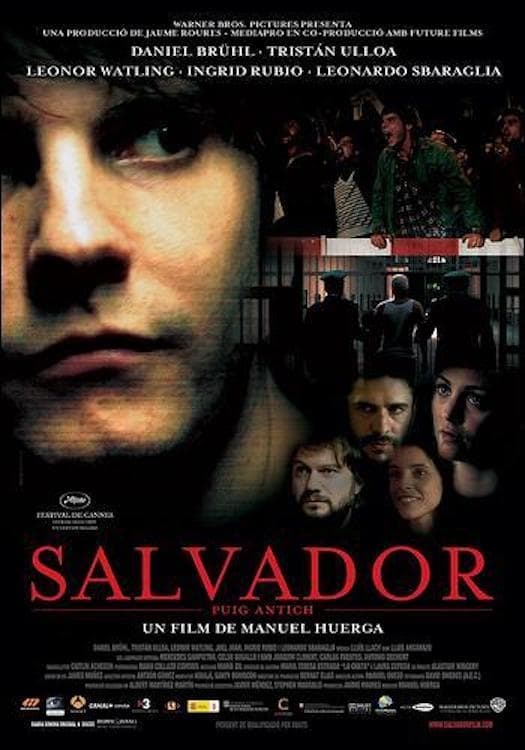
"Salvador (Puig Antich)" is a 2006 biographical drama that sheds light on a dark period in Spain's history. Directed by Manuel Huerga, the film is inspired by a true event from the final years of the Francisco Franco regime — the story of Salvador Puig Antich. Daniel Brühl stars in the lead role, with Diana Gómez also among the cast. The film stands out both as a historical record and as a deeply human drama.
Going beyond being just a biographical film, the production conveys to viewers the shadow an authoritarian regime casts over the justice system, the struggle of the individual against the state, and the fight of a young man for his ideals. Considered one of the important works of Spanish cinema dealing with this period, the film also carries considerable historical weight due to its basis in real events.
Plot
The film tells the story of a young man actively involved in an anarchist group during the final years of the Franco era. Salvador is a character who resists the oppressive regime of the time and fights for his ideals. However, the chain of events he experiences drags him into a process that will have major consequences for both himself and those around him.
The film explores, in layered fashion, the protagonist's past, his relationships with his family and loved ones, how his political views were shaped, and the social conditions he lived under. At the same time, it offers a powerful critique of how the Spanish justice system of the era operated, its approach toward political prisoners, and the impact of social oppression on individuals. By combining both personal and political dimensions, the narrative gives viewers a multifaceted experience.
Why Watch It?
"Salvador (Puig Antich)" stands out as a must-watch film because it depicts a dark period of Spanish history without embellishment or softening. Being one of the rare productions made about the final years of the Franco regime gives the film considerable historical value.
Daniel Brühl's performance is highlighted as one of the film's strongest elements. The actor skillfully conveys the character's inner world, determination, and fears. Director Manuel Huerga's narrative style remains faithful to the true events while never losing its emotional intensity.
Because the film also explores universal themes such as individual freedom, the concept of justice, and the impact of authoritarian regimes on ordinary people, it offers a valuable viewing experience not only for those interested in Spanish history, but also for those who follow political dramas and productions centered on human rights themes. The art direction, which successfully reflects the visual storytelling and period atmosphere, is also one of the film's noteworthy aspects.
Who Is It Suitable For?
This film is a highly suitable choice for viewers who enjoy historical dramas, especially those interested in 20th-century European political history. Those wishing to learn more about Franco-era Spain will benefit from the historical context the film provides.
It also offers a satisfying experience for film lovers interested in strong character studies and biographical narratives based on true events. Those who prefer productions combining political tension with dramatic storytelling will enjoy the film.
On the other hand, this production may not be suitable for those looking for something light and relaxing. With its heavy atmosphere and emotional intensity, the film demands a certain level of attention and patience from viewers. As it contains violent scenes and tense moments, viewers sensitive to such themes are advised to approach it with caution.
Pros and Cons
Pros:
1. Daniel Brühl's impressive and profound performance powerfully reflects the character's emotional journey.
2. The screenplay, based on real events, conveys a historical period in an intimate and striking way.
3. The visual direction and art design, which successfully capture the period atmosphere, transport the viewer back in time.
Cons:
1. The heavy and tense theme may not appeal to every audience.
2. For viewers unfamiliar with the historical context beforehand, the background of some scenes may not be sufficiently clear.
Genre and Tone
The film can be described as a blend of biography and drama, also incorporating elements of political tension. In tone, it is predominantly serious, realistic, and at times pervaded by a somber atmosphere. The simple yet effective visual language characteristic of period films supports the overall mood of the production.
Scenes of high emotional intensity draw the viewer into the oppression and struggle experienced by the character. The director's chosen narrative style steers away from melodrama, focusing instead on presenting events within as realistic a framework as possible. This approach further reinforces the film's quality as a historical document.
Runtime and Viewing Experience
The film has a standard feature-length runtime and progresses its narrative at a balanced pace. The story's development allows viewers enough time to connect with the character and the period, while avoiding unnecessary padding.
The viewing experience requires attention. Following the film's historical context will be helpful in better understanding the plot. Due to its emotional intensity, it is recommended to watch the film in one sitting and with full attention. If watching with subtitles, this may offer a richer experience in terms of capturing the nuances of the Spanish dialogue.
Similar Productions
- "La vida de nadie" (2002)
- "Land and Freedom" (1995)
- "Pan's Labyrinth" (2006)
- "The Lives of Others" (2006)
- "Che: Part One" (2008)
- "Belle Époque" (1992)
Final Assessment
"Salvador (Puig Antich)" is a compelling biographical drama that boldly confronts a painful period in Spanish history, bolstered by strong performances. Daniel Brühl's outstanding portrayal and Manuel Huerga's realistic directing style are the elements that make this film stand out among historical dramas.
Although its heavy themes and emotional intensity may not appeal to every viewer, it offers a satisfying viewing experience for those interested in political history, human rights, and themes of individual resistance. This film, which sincerely portrays the dark side of Franco-era Spain on screen, can be regarded as one of the biographical productions holding a significant place in film history.
Details
Cast (18)

















ByTv Değerlendirmesi
Gallery
Yorumlar
Henüz yorum yok. İlk yorumu siz yazın.
Recommended




Senin için seçelim
Türe göre süz, puana göre sırala ya da çarkı çevirip sürpriz öneri al.