
Dark City (1998)
Directed by Alex Proyas, Dark City is a cult production that reached moviegoers in 1998, blending science fiction and neo-noir genres with extraordinary mastery. Bringing together a powerful cast including Rufus Sewell, Kiefer Sut…
Overview
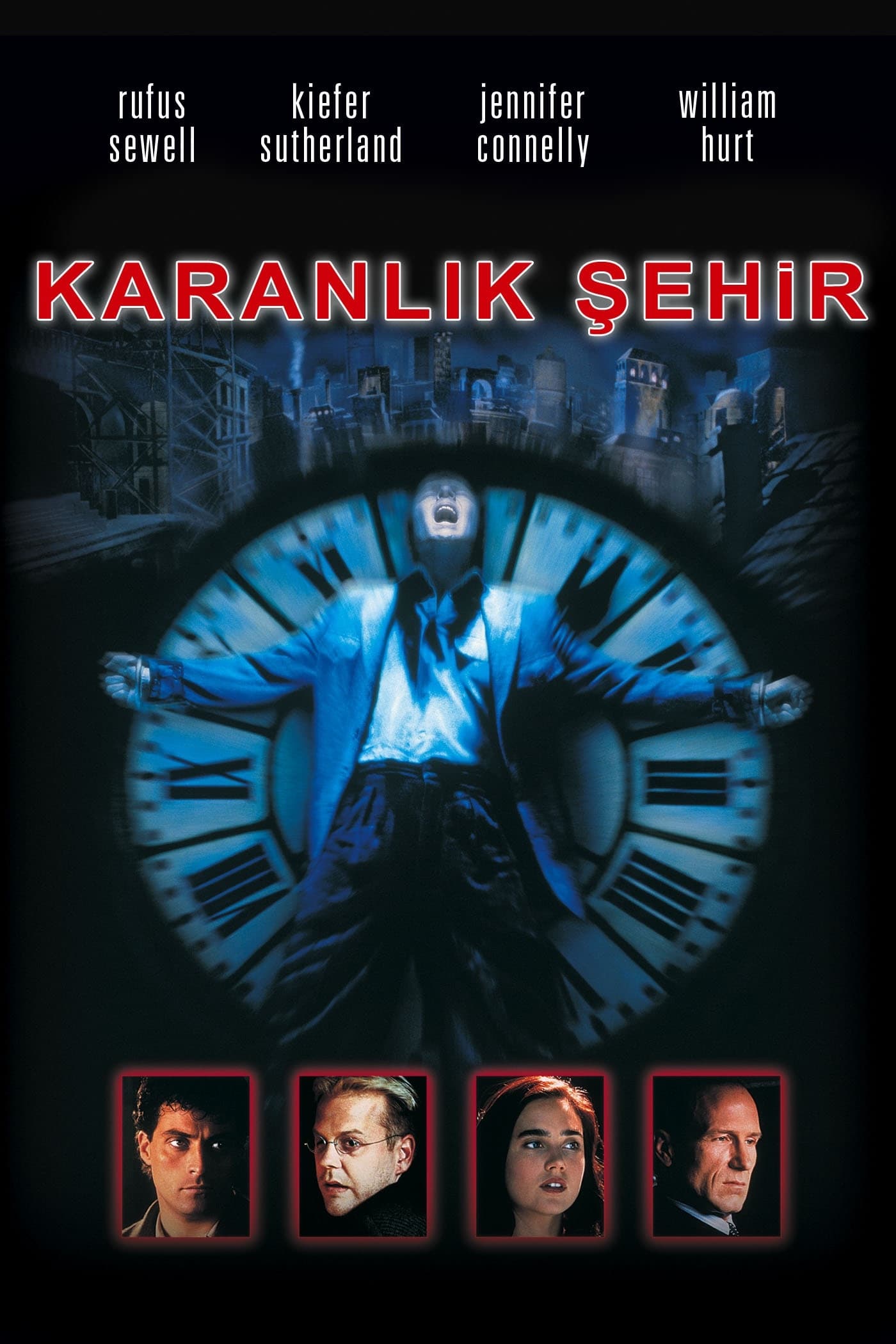
Directed by Alex Proyas, Dark City is a cult production that reached moviegoers in 1998, blending science fiction and neo-noir genres with extraordinary mastery. Bringing together a powerful cast including Rufus Sewell, Kiefer Sutherland, Jennifer Connelly, and William Hurt, the film was ahead of its time in terms of visual design and atmosphere, going on to inspire many science fiction productions that followed. The story, set in a dark, rainy city trapped in perpetual night, draws the viewer into a mysterious and unsettling atmosphere from the very first scene.
The film progresses on a philosophical foundation built around concepts of memory, identity, and reality. The remarkably innovative use of visual effects for its time and the dystopian design of the city's architecture also make the film technically noteworthy. Although Dark City fell short of expectations at the box office, it has risen over time to a respected position among critics and cinephiles, achieving "cult classic" status. Roger Ebert's inclusion of it on his list of favorite films is an important point of reference regarding the production's artistic value.
Plot
The story begins with John Murdoch waking up in a hotel room, with no memory of his past and a murder victim lying beside him. Not knowing who he is, why he is there, or whether he is truly a killer, Murdoch finds himself fleeing from both the police and mysterious, pale-skinned men. The city's residents have also strangely begun to doubt their own pasts, as if everyone's memories are being manipulated by someone.
As Murdoch investigates the truth, he realizes that the city itself is no ordinary place. In this city where the sun never rises and darkness is constant, the mysterious events that occur at midnight are connected to the alteration of people's identities and memories. Detective Frank Bumstead's investigation, Dr. Daniel Schreber's suspicious role, and Murdoch's complicated relationship with his wife Emma deepen the layers of the story. As the viewer pursues the truth step by step alongside Murdoch, they begin to uncover the great secret behind the city and its inhabitants. The film presents this journey by blending classic film noir aesthetics with science fiction elements.
Why Should You Watch It?
Dark City offers a visually and conceptually rich experience that has carved out a unique place in cinema history. One of the film's most striking aspects is its art direction and production design; the city is crafted as a character in its own right, creating a unique visual identity that blends Gothic architecture with the aesthetics of 1940s America and science fiction elements.
The film is also significant for having inspired later productions that achieved great success, such as "The Matrix"; its narrative structure, built on themes of perception of reality, simulation, and control, offers viewers an intellectually satisfying experience. Trevor Jones's atmospheric score reinforces the film's tense mood, while Rufus Sewell's performance convincingly conveys the character's confusion and search for answers. Kiefer Sutherland's contribution of depth to the strange and unsettling Dr. Schreber character also deserves special praise. With its structure that raises philosophical questions and prompts the viewer to think, Dark City promises far more than an ordinary science fiction film.
Who Is It For?
Dark City is ideal especially for those who love atmospheric and thought-provoking science fiction films. Viewers interested in neo-noir aesthetics and dark, mysterious narratives will find what they're looking for in this film. It is also a satisfying choice for those who enjoy stories dealing with philosophical themes such as identity, memory, and reality.
For those expecting an action-packed, fast-paced science fiction film, the movie may feel a bit slow, as Dark City devotes more time to building atmosphere and mystery. Fans of classic film noir will find the film's visual language and character archetypes familiar. It is also an important production to discover for viewers curious about cinema history and interested in cult films.
Pros and Cons
Pros: 1. Impressive and original visual design that perfectly reflects the dystopian city atmosphere. 2. An original screenplay that poses deep philosophical questions about identity and reality. 3. Strong performances from Rufus Sewell, Kiefer Sutherland, and William Hurt.
Cons: 1. The narrative pace may feel slow and unfocused for some viewers. 2. The computer-generated visual effects of the era may appear dated by today's standards.
Genre and Tone
Dark City offers a rare and successful synthesis of science fiction and neo-noir genres. The film's tone generally maintains a dark, melancholic, and mysterious atmosphere. Its visual language, drawing on the aesthetics of classic detective films, blends with dystopian science fiction elements to create a unique cinematic experience. Elements of suspense persist throughout the story, while philosophical and existentialist themes enrich the film's intellectual depth. Lighting, color palette, and camera angles stand out as technical elements that reinforce the film's dark and eerie mood.
Runtime and Viewing Experience
The film runs approximately 100 minutes, and this length offers a smooth experience that unravels the story's mystery step by step without boring the viewer. It's important to pay close attention to detail while watching Dark City, as the film delivers its clues through skillfully arranged scenes. Due to the intensity of its dark scenes, watching it with a good screen and sound system helps fully convey the atmosphere. The fact that details missed on first viewing take on new meaning on a second viewing is also a testament to the film's layered structure.
Similar Productions
For those who love Dark City, a few productions with similar atmospheres and themes can be recommended. "The Matrix" (1999) offers a similar science fiction experience dealing with themes of reality and simulation. "Blade Runner" (1982) is a thematically close work with its dystopian urban aesthetics and questioning of identity. "The Truman Show" (1998) offers a similar conceptual framework by telling the story of a character living within a controlled reality. "Equilibrium" (2002) stands out with its dystopian world design and philosophical subtext. "Twelve Monkeys" (1995) appeals to a similar audience with its complex narrative questioning concepts of time, memory, and reality. "eXistenZ" (1999), meanwhile, can be an intriguing alternative with its structure that blurs the line between reality and fiction.
Final Assessment
Dark City is a visually striking and conceptually profound science fiction classic that offers a vision ahead of its time. Although this production, directed by Alex Proyas, failed to achieve the box office success it expected, it stands today as a valuable treasure still waiting to be discovered, thanks to the cult status it has gained over the years and the impact it has left on cinema history. With its dark atmosphere, strong acting performances, and philosophical themes explored along the axis of reality and identity, Dark City goes beyond being merely a science fiction film to offer its viewers an intellectual journey. It is one of the original and impressive productions in cinema history that should not be missed by fans of science fiction and neo-noir.
Details
Cast (39)




















Ödüller
- En İyi Bilim Kurgu Filmi Saturn Ödülü 1999
- Bram Stoker Award for Best Screenplay 1998
1 adaylık
- En İyi Dramatik Sunum Hugo Ödülü 1999
ByTv Değerlendirmesi
Gallery
Yorumlar
Henüz yorum yok. İlk yorumu siz yazın.
Recommended






Senin için seçelim
Türe göre süz, puana göre sırala ya da çarkı çevirip sürpriz öneri al.