
The Fallen Idol (1948)
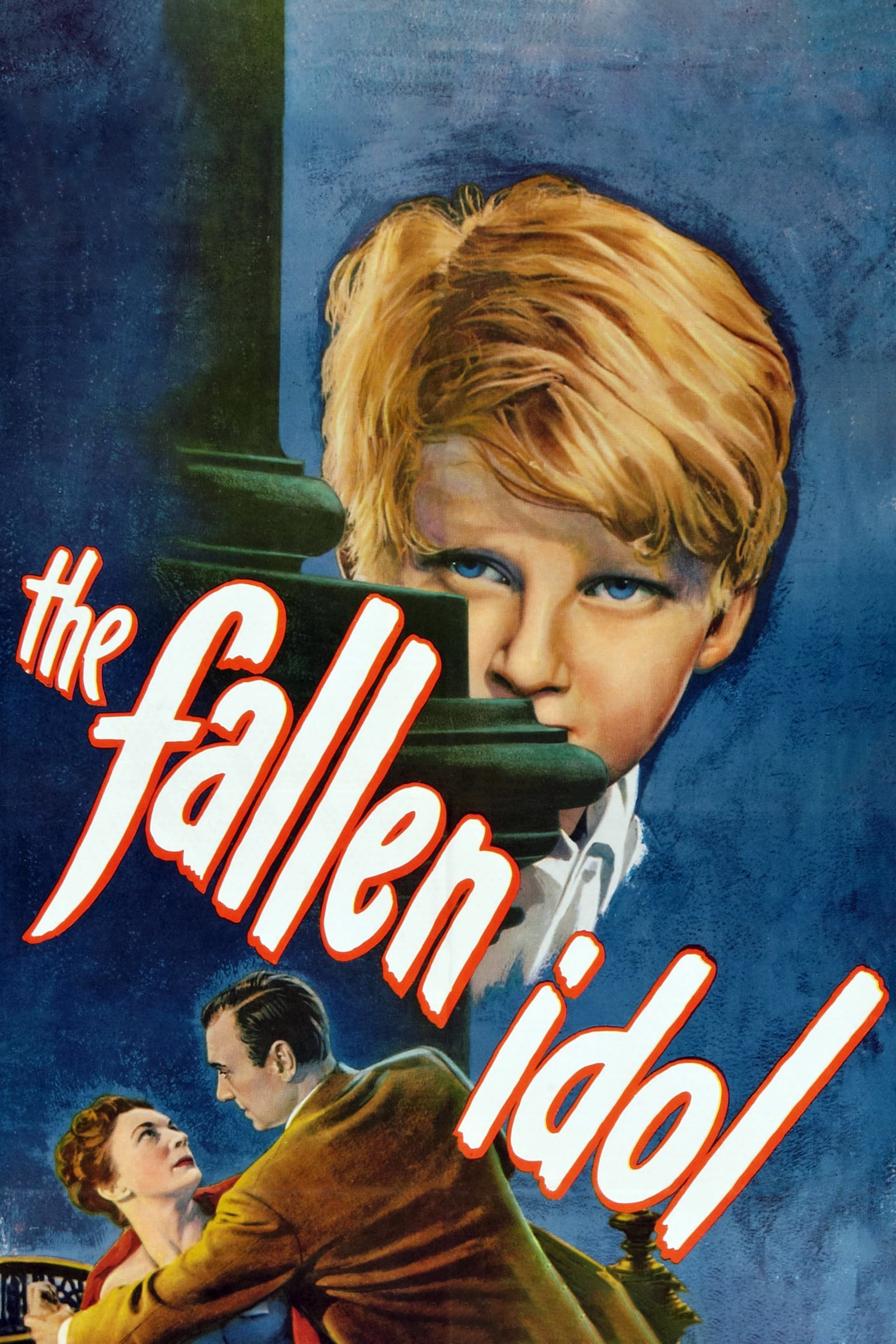
The Fallen Idol is a psychological thriller-drama directed by Carol Reed, one of the most important auteurs of British cinema, masterfully blending film noir aesthetics with a child's point of view. Brought to the screen in 1948…
Overview
The Fallen Idol is a psychological thriller-drama directed by Carol Reed, one of the most important auteurs of British cinema, masterfully blending film noir aesthetics with a child's point of view. Brought to the screen in 1948, the film is adapted from Graham Greene's short story "The Basement Room," with the screenplay also written by Greene himself. This collaboration between Reed and Greene would bear its first great fruit here, a year before they would go on to write cinema history in gold letters with "The Third Man."
The film relates events taking place at a London embassy through the eyes of the family's young son, Philippe. This child character, played by Bobby Henrey, is an observer who cannot fully grasp the complex lies, betrayals, and hidden passions of the adult world, but who senses intuitively that something is wrong. The relationship between the butler Baines, played by Ralph Richardson, and the embassy secretary, played by Michèle Morgan, fuels the tension that sits at the film's core.
Notable for its visual storytelling, the production carries the classic film noir atmosphere into the embassy building's massive corridors, staircases, and dim rooms, thanks to Georges Périnal's cinematography, full of shadow-and-light interplay. This technical mastery allows the film to transcend being merely a family drama and take on a genuine thriller identity. Gérard Heinz, also part of the cast, contributes to the film's diplomatic atmosphere as one of the characters surrounding the embassy.
Plot
Young Philippe is a lonely child whose father is an ambassador, and who rarely ventures outside the house. His closest friend and hero figure in life is the household's butler, Baines. In Philippe's eyes, Baines is a brave man who has traveled the world and lived through adventures; but reality is far more complex and dark. Baines's marriage to his ill-tempered wife at home is unhappy, and he is secretly carrying on a forbidden affair with a young woman, the embassy secretary.
Philippe is drawn unwillingly into this adult world. The small lies Baines asks him to keep gradually turn into an ever-expanding web. The clash between the child's innocence and the moral ambiguities of the adults around him leads to a tension that builds step by step within the walls of the house. An unexpected and tragic event that occurs one night plunges Philippe into deep uncertainty about the truthfulness of the lies he has told and the things he has seen.
The film deals with how a child's perception of heroism is shattered, and his discovery that the people he trusts can also be flawed, mistaken, even dangerous beings. This process of discovery is presented to the viewer not through a classic detective plot, but interwoven with the fractures in the child's inner world.
Why Should You Watch It?
The Fallen Idol is still considered one of the most successful examples among films that employ a child's point of view. Bobby Henrey's natural and affecting performance forms the foundation of the film's emotional realism; his ability to convey a child's confusion, fear, and loyalty so convincingly also demonstrates director Carol Reed's mastery in directing actors.
Ralph Richardson's performance is the film's greatest strength. His presentation of the character Baines as both endearing and, deep down, a tragic figure allows the viewer to feel sympathy and suspicion toward the character simultaneously. This ambivalent emotional state is the most important element feeding the film's moral complexity.
The film is also extremely powerful in terms of visual storytelling. Georges Périnal's camera turns the embassy building into almost a character in itself; the wide staircases, long corridors, and shadowy corners resemble a vast and menacing labyrinth when viewed through the child's eyes. This use of space serves as an effective tool both in building tension and in visualizing the child's loneliness.
Furthermore, the moral gray areas in Graham Greene's screenplay keep the viewer away from easy answers. The film does not draw a simple line between who is "good" and who is "bad"; instead, it shows the complexity of human nature, how lies snowball, and how innocence is tested when it encounters the adult world.
Who Is It Suitable For?
The Fallen Idol is a must-see production for viewers interested in classic British cinema, film noir aesthetics, and the elegance of the era's black-and-white visual language. It is also a satisfying choice for those who wish to experience the psychological thriller genre not through action or violence alone, but through character depth and atmosphere.
Those curious about stories told from a child's perspective will find this film to be one of the successful examples in that field. Viewers familiar with Graham Greene's literary world, or those who enjoyed later Reed-Greene collaborations such as "The Third Man," will find a similar moral complexity and atmospheric tension in this film.
On the other hand, for viewers accustomed to fast-paced, action-heavy modern thrillers, the film's slow and deliberate narrative style may prove somewhat challenging. This production is a classically "slow-burning" drama that requires patience and a focus on the characters' inner worlds.
Pros and Cons
Pros:
1. Ralph Richardson's complex and layered performance forms the emotional and moral center of the film.
2. Bobby Henrey's child performance, with its naturalness and credibility, is one of the film's strongest elements.
3. Georges Périnal's cinematography, through its use of shadow and light, perfectly supports the tension visually.
Cons:
1. For modern viewers, the pacing may feel heavy and slow in some scenes.
2. The narrative built around a child's perspective may make it difficult for some viewers to form an emotional connection.
Genre and Tone
The film has a structure that blends psychological drama with film noir elements. In tone, it carries a melancholic, tense, and at times unsettling atmosphere; however, this tension is built not through explicit violence or action scenes, but through the underlying strain in the relationships between characters. The contrast between the child's innocent gaze and the dark realities of the adult world is the fundamental dynamic that defines the film's tone.
Runtime and Viewing Experience
The film has an average feature-length runtime in line with classic-era standards, and within that time it builds its tension in a balanced manner. The viewing experience requires careful attention, because the film shapes its narrative not through major dramatic outbursts but through small details, glances, and silences. The black-and-white image quality and the cinematographic techniques of the era offer today's viewer a nostalgic yet compelling cinematic experience.
Similar Productions
- The Third Man (1949)
- Odd Man Out (1947)
- The Innocents (1961)
- Brighton Rock (1948)
- The Third Secret (1964)
- Night Train to Munich (1940)
Final Assessment
The Fallen Idol is a perfect synthesis of Carol Reed's visual mastery and Graham Greene's narrative rooted in moral complexity. By using a child's point of view to reveal the lies, betrayals, and tragic consequences of the adult world, the film is regarded as one of the most compelling psychological dramas not only of its era but of cinema history as a whole. The performances of Ralph Richardson and Bobby Henrey are the essential pillars carrying the film's emotional power. For any viewer interested in classic cinema, atmospheric tension, and deep character studies, this film is a valuable treasure waiting to be discovered.
Details
Cast (19)











Ödüller
- National Board of Review: Top Ten Films
2 adaylık
- En İyi Uyarlama Senaryo Akademi Ödülü 1950
- En İyi Yönetmen Akademi Ödülü 1950
ByTv Değerlendirmesi
Gallery
Yorumlar
Henüz yorum yok. İlk yorumu siz yazın.
Recommended








Senin için seçelim
Türe göre süz, puana göre sırala ya da çarkı çevirip sürpriz öneri al.